Home Comfort Guide
Everything that makes a small home comfortable in one place: warmth, cool, clean air, quiet and good sleep, with links to the detailed guide for each.
In this article
Start here
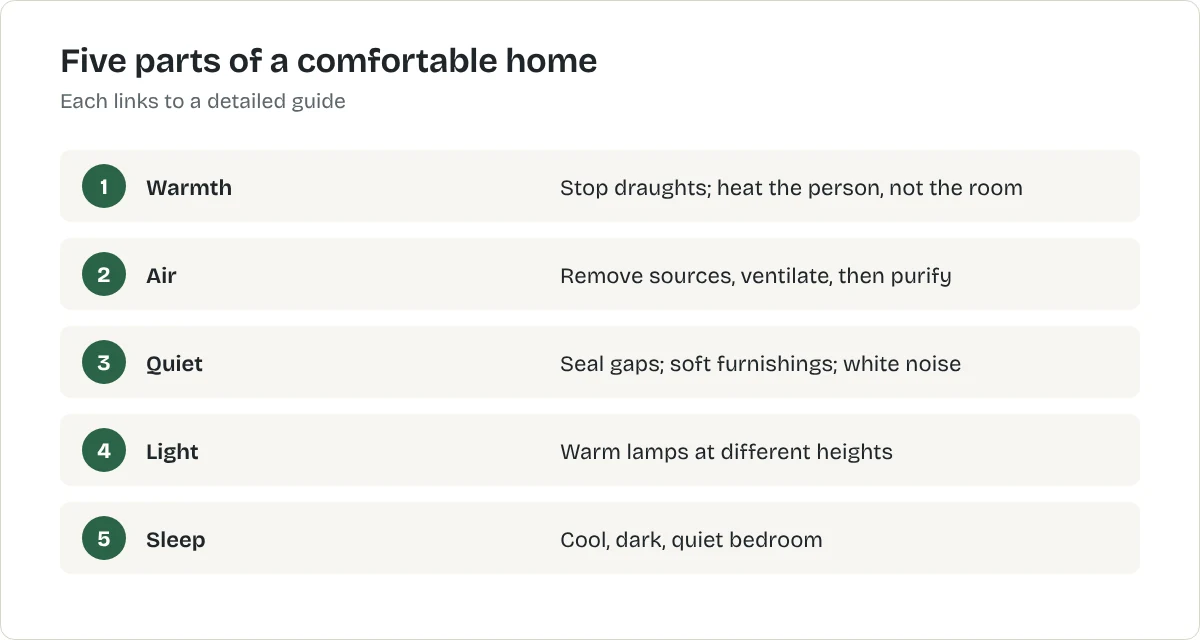
Comfort at home comes down to five things: temperature, air, noise, light and sleep. In a small apartment they affect each other: a closed window keeps the warmth in but traps damp, and a fan that cools you also makes noise. This guide takes each in turn, gives the first things to try, and links to the detailed article.
Warmth without high bills
Stop draughts at doors and windows, close curtains at dusk, and heat yourself before the room. A heated throw or electric blanket costs pennies an hour; a space heater costs far more.
Clean, fresh air
Remove sources such as smoke and strong fragrance, ventilate twice a day, keep humidity in range and then, if particles are still a problem, add a purifier sized for the room.
A quieter home
Seal gaps around doors, put soft furnishings and bookcases against shared walls, and mask what is left with steady background sound.
Light that feels good
Several warm lamps at different heights make a room feel calm in the evening; brighter, cooler light helps you work in the morning.
Putting it together
- Morning: open windows for ten minutes; daylight on.
- Day: curtains closed in the hottest hours in summer; lamps off.
- Evening: curtains closed, warm lamps on, extractor fans on while cooking.
- Night: a cool, dark, quiet bedroom; white noise if you need it; heat the bed, not the room.
How to make an apartment more comfortable sets out the free and low-cost fixes for each of the five.
Keep reading
Where to start if everything feels wrong
Fix sleep first. A cool, dark, quiet bedroom makes every other problem easier to live with. Then fix the room you spend most waking hours in, usually the living room: warmth, light and noise there. Leave the rooms you only pass through until last.
Quick wins under an hour
- Fit a self-adhesive seal around the front door.
- Swap the living-room bulbs for warm-white LEDs of the right brightness.
- Move a bookcase or wardrobe against the wall you share with neighbours.
- Clean the extractor fan grilles and the air purifier pre-filter.
- Put the main lamp on a sunset schedule with a smart plug.
When to ask for help
Some comfort problems belong to your landlord: persistent damp and mould, heating that does not work, windows that will not close, broken extractor fans. Report them in writing with photos. If you smell gas, leave and call your gas emergency number.
Comfort on a budget
The cheapest improvements are habits: closing curtains at dusk, airing rooms briefly, moving furniture away from cold walls and radiators, and using warm layers before turning up the heating. After that, draught seals, rugs and lamps give the most comfort for the least money. Bigger purchases such as an air purifier or a fan heater come last, once you know exactly which problem you are solving.
One room at a time
Comfort is easier to improve in stages. Fix one room, live in it for a week, and notice what still bothers you before moving on.
Frequently asked questions
What makes a home comfortable?
Steady temperature, fresh air without damp, low noise, good light and somewhere calm to sleep.
What is the cheapest way to stay warm?
Stop draughts, close curtains at dusk and heat yourself with layers, a heated throw or an electric blanket rather than heating every room.
Do air purifiers make a home more comfortable?
They help with dust, pollen and smoke once you have dealt with the source and ventilation. They do not remove damp.
Related articles
Home Comfort
How to Make an Apartment More Comfortable
Most discomfort in an apartment comes from five things: temperature, air, noise, light and clutter. Here is how to fix each, starting with what costs nothing.
Home Comfort
Best Air Purifiers for Small Apartments
Three HEPA purifiers compared on the number that matters, CADR. One suits a bedroom; two suit a living room. Sizes and specifications come from the makers and ENERGY STAR.
Energy & Money Saving
Electric Blanket vs Space Heater: Cost Compared
Heating yourself costs a fraction of heating a room. How the running costs of an electric blanket, a heated throw and a space heater compare at US and UK rates.