Apartment Noise Reduction Guide
Noise in an apartment comes through gaps, walls, floors and windows. This guide shows which you can fix, which you can mask, and when to involve your landlord or council.
In this article
Start here
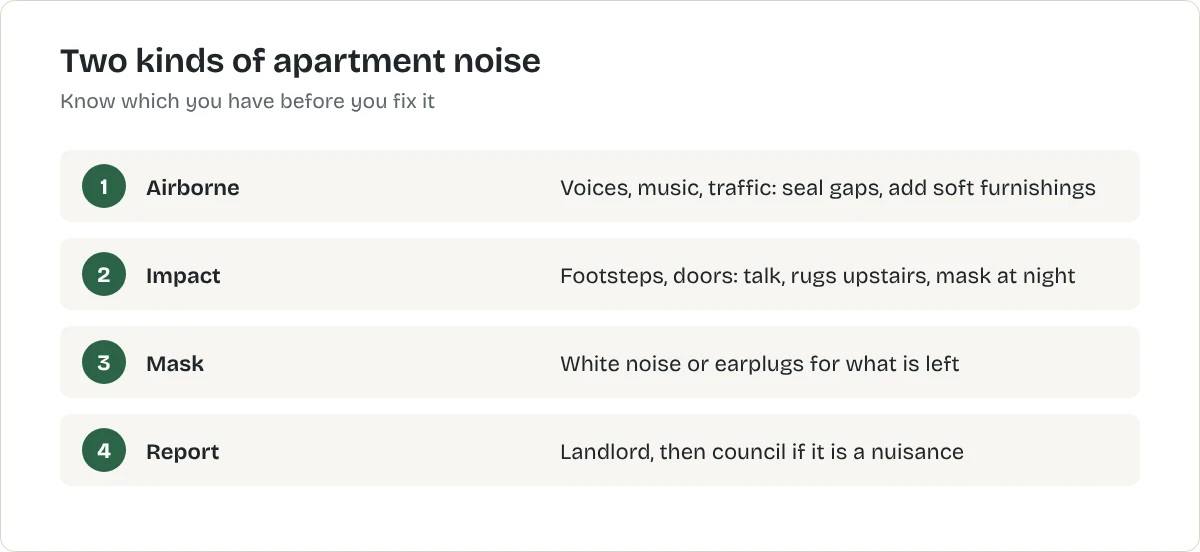
Noise reaches you in two ways. Airborne noise (voices, music, traffic) travels through the air and squeezes through gaps. Impact noise (footsteps, slammed doors) travels through the building's structure. You can do a lot about the first and less about the second, so it helps to know which you have.
Fix: close the gaps
Sound follows air. Gaps under and around doors and around windows let a surprising amount through.
- Fit seals around the front door and a sweep at the bottom.
- Close trickle vents only briefly, as they are there for ventilation and damp control.
- Heavy curtains help with traffic noise at windows.
Best for noise and draughts coming under or around a door
Door draught and acoustic seal
Self-adhesive seals or a door sweep that close the gaps around a door. This is a type of product, not one model. The button opens the retailer's results for it, so compare a few before you choose.
What we like
- Gaps carry a lot of sound; closing them helps
- Also stops draughts
- Cheap
What to know
- Too thick and the door will not close
- Adhesive can mark paint when removed
- Little effect on noise through walls
United States
United Kingdom
Not listed with our CA retailers yet.
Not listed with our AU retailers yet.
Research-based recommendation: we have not tested this product ourselves. How we evaluate products. Details checked October 2026.
Soften: absorb what gets in
Bare rooms echo, which makes every sound louder. Rugs, curtains, upholstered furniture and full bookshelves absorb it. Put wardrobes and bookcases against the wall you share with neighbours. A rug with a thick underlay also softens your own footsteps for the people below.
Best for echo and footstep noise in your own apartment
Rug with a thick underlay
A rug on a dense felt or rubber underlay that softens sound and footsteps. This is a type of product, not one model. The button opens the retailer's results for it, so compare a few before you choose.
What we like
- Cuts echo in bare rooms
- Softens your footsteps for neighbours below
- Underlay stops slipping
What to know
- Does little for noise from upstairs
- Thick underlay can catch doors
- Check underlay suits your floor type
United States
United Kingdom
Not listed with our CA retailers yet.
Not listed with our AU retailers yet.
Research-based recommendation: we have not tested this product ourselves. How we evaluate products. Details checked October 2026.
Mask: cover what is left
A steady background sound makes changes in noise less noticeable. A fan, a white noise machine or earplugs help most at night.
Footsteps from upstairs
Impact noise is the hardest to fix from below. A conversation with your neighbour, and rugs on their floor, help most. How to reduce noise from upstairs neighbours covers the approach step by step.
When to report it
Talk first: many neighbours do not realise how much they can be heard. If that fails, speak to your landlord or managing agent, especially if a lease requires carpets or quiet hours. In England, councils must look into noise that could be a statutory nuisance and can serve an abatement notice; in the US, many cities and buildings have noise rules enforced locally.
Putting it together
Seal gaps first, soften the room second, mask what is left at night. Keep a diary of persistent noise with dates and times in case you need to report it.
Keep reading
Find where the noise gets in
Stand in each room at a noisy time and listen. Sound that is loudest near the door is coming through gaps around it. Sound loudest at the window is traffic through the glass and frame. Sound that seems to come from everywhere, especially thuds, is travelling through the structure. Knowing which you have tells you whether to seal, soften or mask.
What does not work
- Egg boxes and thin foam tiles on the wall. They reduce echo a little but do almost nothing to noise from next door.
- Expensive "soundproof" curtains for wall noise. Heavy curtains help at windows, not through walls.
- Ceiling treatments in a rental. Blocking impact noise from above is building work.
Be a considerate neighbour too
Rugs with underlay, felt pads on chair legs, soft-close habits with doors and keeping music and laundry to reasonable hours make it easier to ask the same of others.
Budget order
Start with what is free: moving the bed and desk away from the noisy wall, and talking to neighbours. Then door seals and rugs with underlay, then heavy curtains, then a white noise machine. Each step is cheaper than the next and fixes a more common problem.
Sleep first
If noise disturbs your sleep, start in the bedroom: move the bed away from the noisy wall, seal the door, hang heavy curtains, and use a white noise machine or earplugs if you can sleep in them. Earplugs help many people, but check they fit comfortably before relying on them every night.
Frequently asked questions
Can renters soundproof an apartment?
Not fully, because most noise travels through the building's structure. You can seal gaps, soften rooms and mask noise, which together make a real difference.
What is the cheapest way to reduce noise?
Seal gaps around doors and windows, and put soft or heavy furniture such as bookcases and wardrobes against the shared wall.
When should I complain about noise?
After a polite conversation has not worked. In England, councils must investigate noise that could be a statutory nuisance.
Sources
Related articles
Home Comfort
Best White Noise Machines
A fan-based machine sounds natural and never loops; a compact speaker-based machine offers more sounds and timers. How they compare, and when earplugs are the better answer.
Home Comfort
How to Make an Apartment More Comfortable
Most discomfort in an apartment comes from five things: temperature, air, noise, light and clutter. Here is how to fix each, starting with what costs nothing.
Apartment Living
How to Reduce Noise From Upstairs Neighbours
Footsteps from upstairs travel through the building, so you cannot block them from below. What works: a friendly conversation, rugs upstairs, masking at night and, if needed, the landlord or council.