How to Reduce Noise From Upstairs Neighbours
Footsteps from upstairs travel through the building, so you cannot block them from below. What works: a friendly conversation, rugs upstairs, masking at night and, if needed, the landlord or council.
In this article
- What you need to know first
- Step 1: Keep a short diary
- Step 2: Talk to your neighbour
- Step 3: Reduce what you hear
- Step 4: Check the lease and talk to your landlord
- Step 5: Know when it becomes a formal complaint
- Common mistakes to avoid
- What to do next
- How to start the conversation
- If you live upstairs
- Keep a record
- Frequently asked questions
What you need to know first
Footsteps, dropped objects and slammed doors are impact noise: they travel through the floor and walls of the building, not through the air. That is why earplugs and door seals help with voices but barely touch footsteps, and why almost nothing you fit to your own ceiling as a renter will block them. The most effective fixes are upstairs, so they start with a conversation.
Step 1: Keep a short diary
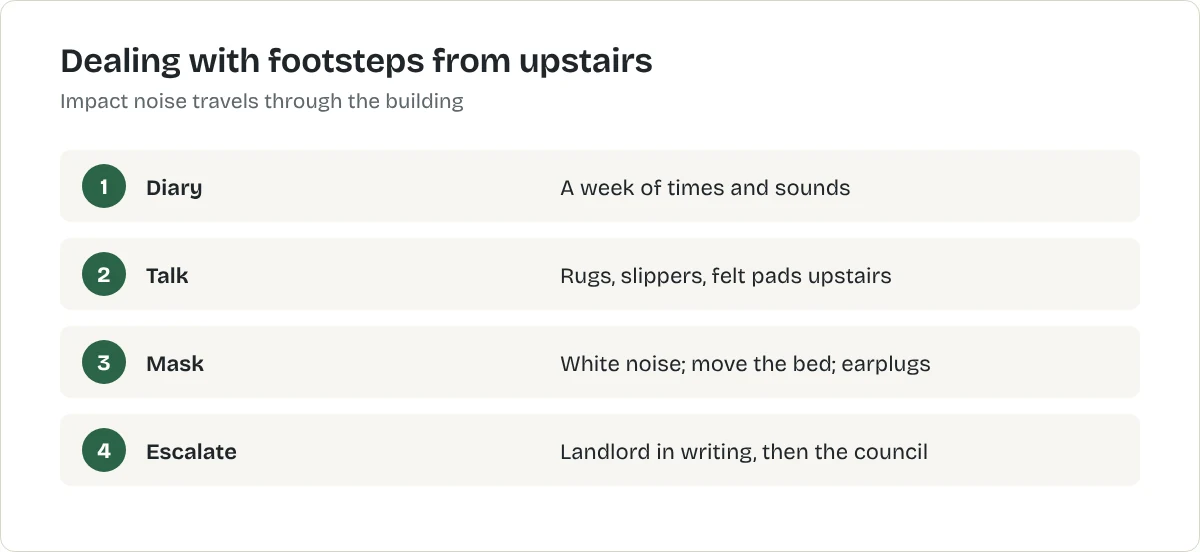
For a week, note when the noise happens and what it is: footsteps at 6am, music after midnight, a washing machine late at night. It helps you describe the problem calmly and shows whether it is everyday living or something unreasonable.
Step 2: Talk to your neighbour
Many people have no idea how much they can be heard. Go round at a calm time, describe specific times and sounds, and ask rather than accuse. Simple changes make a big difference:
- Rugs with thick underlay in hallways and living areas.
- Soft slippers instead of shoes indoors.
- Felt pads on chair and table legs.
- Washing machine and dryer not run late at night.
Step 3: Reduce what you hear
- Mask it. A white noise machine or fan makes thuds less noticeable at night. Best white noise machines compares types.
- Move the bed away from the part of the room under the noisiest area upstairs, often their hallway.
- Earplugs for the worst nights.
Best for masking noise in a bedroom
Compact white noise machine
A small speaker-based sound machine with white noise and other steady sounds. This is a type of product, not one model. The button opens the retailer's results for it, so compare a few before you choose.
What we like
- Several sound types
- Small enough for a bedside table
- Many have timers and volume control
What to know
- Speaker sounds can loop: listen before you settle
- Buy a version with the right plug for your country
- Some have bright lights: check for a dimmer
United States
United Kingdom
Not listed with our CA retailers yet.
Not listed with our AU retailers yet.
Research-based recommendation: we have not tested this product ourselves. How we evaluate products. Details checked October 2026.
Best for noise you cannot block any other way
Foam earplugs
Soft disposable earplugs that expand to seal the ear canal. This is a type of product, not one model. The button opens the retailer's results for it, so compare a few before you choose.
What we like
- Cheapest noise fix there is
- Works for traffic and voices
- Small and portable
What to know
- Uncomfortable for some side sleepers
- Replace often for hygiene
- You may not hear alarms: test with yours
United States
United Kingdom
Not listed with our CA retailers yet.
Not listed with our AU retailers yet.
Research-based recommendation: we have not tested this product ourselves. How we evaluate products. Details checked October 2026.
Step 4: Check the lease and talk to your landlord
Some apartment leases require carpets or rugs over part of the floor, or set quiet hours. If your neighbour's lease has such a clause, the landlord or managing agent can enforce it. Put your request in writing and include your diary.
Step 5: Know when it becomes a formal complaint
In England, councils must investigate noise that could be a statutory nuisance: noise that unreasonably and substantially interferes with the use or enjoyment of a home, or harms health. They can serve an abatement notice, and between 11pm and 7am can act on noise above set levels. In the US, noise rules are local: check your city's noise ordinance and your building's rules.
Common mistakes to avoid
- Banging on the ceiling. It escalates things and rarely helps.
- Waiting months, then exploding. Raise it early and calmly.
- Expecting everyday living noise to stop entirely. Some sound is part of apartment life; the aim is reasonable.
What to do next
For the rest of your home, see the apartment noise reduction guide, which covers gaps, soft furnishings and masking for every kind of noise.
How to start the conversation
Choose a calm time, not the moment the noise wakes you. Introduce yourself if you have not met. Describe the effect rather than blame: "Footsteps come through very clearly in my bedroom early in the morning; I don't think the floor has much insulation." Ask if they would be open to a rug in the hallway or bedroom, and offer something in return, such as letting them know about your own noise. Follow up with a friendly note if things improve; it makes future conversations easier.
If you live upstairs
Rugs with underlay in the rooms you walk through most, slippers indoors, felt pads on chair legs and closing doors gently cut the noise you send down. If a neighbour raises it, treat it as useful information; most people below cannot hear what you think they can.
Keep a record
If noise continues, keep a short diary of dates, times and what you heard. It helps when talking to the landlord or managing agent and shows the pattern rather than one bad night.
Frequently asked questions
Can I soundproof my ceiling as a renter?
Not practically. Ceiling soundproofing is construction work. Focus on the source, on masking and on your landlord.
Are footsteps a statutory nuisance?
GOV.UK guidance does not say; the test is whether noise unreasonably and substantially interferes with the use or enjoyment of your home. Councils judge each case, and everyday living noise is often not enough.
Do white noise machines help with footsteps?
They help you notice sudden thuds less, especially at night. They do not stop the sound.
Sources
Related articles
Home Comfort
Best White Noise Machines
A fan-based machine sounds natural and never loops; a compact speaker-based machine offers more sounds and timers. How they compare, and when earplugs are the better answer.
Home Comfort
Apartment Noise Reduction Guide
Noise in an apartment comes through gaps, walls, floors and windows. This guide shows which you can fix, which you can mask, and when to involve your landlord or council.
Apartment Living
The Small Apartment Living Guide
Everything that makes a small apartment easier to live in, in one place: storage, furniture, light, noise, air, cleaning, work and renter-safe upgrades.