Small Space Furniture Buying Guide
How to choose furniture for a small home: measure the room and the route, choose pieces that earn their space, and avoid the mistakes that make rooms feel smaller.
In this article
Start here
In a small home, every piece of furniture costs floor space, and floor space is what makes a room feel calm. Good small-space furniture fits the room, gets through the door, and does its job without taking more room than it needs. This guide sets out how to choose, and links to the detailed guide for each kind of furniture.
Measure the room and the route
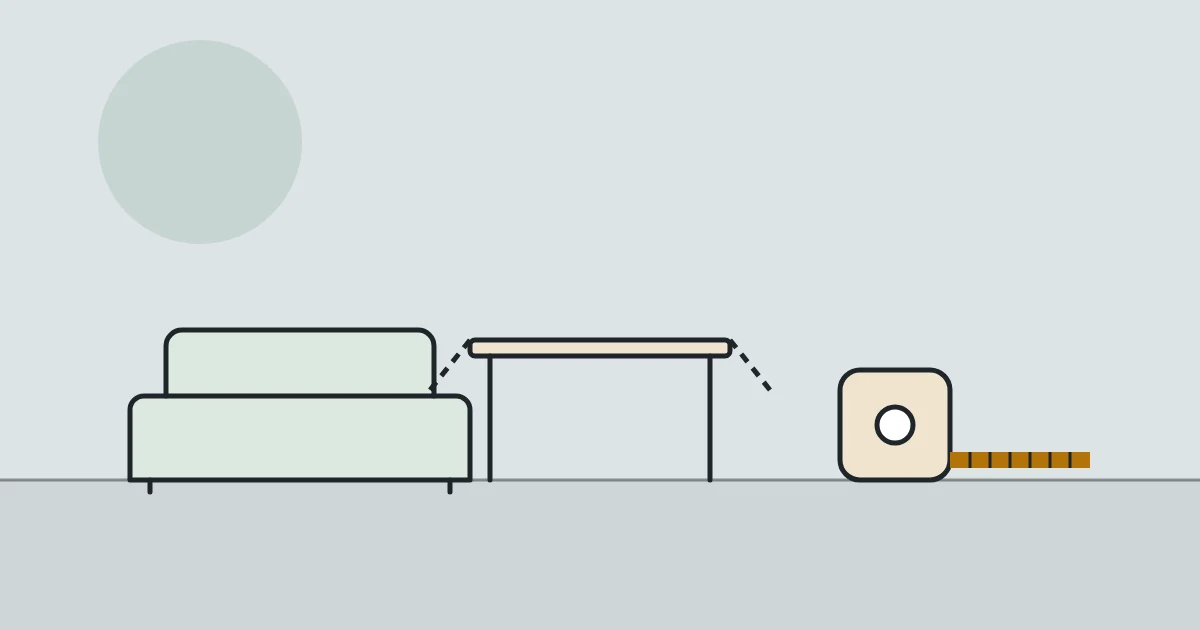
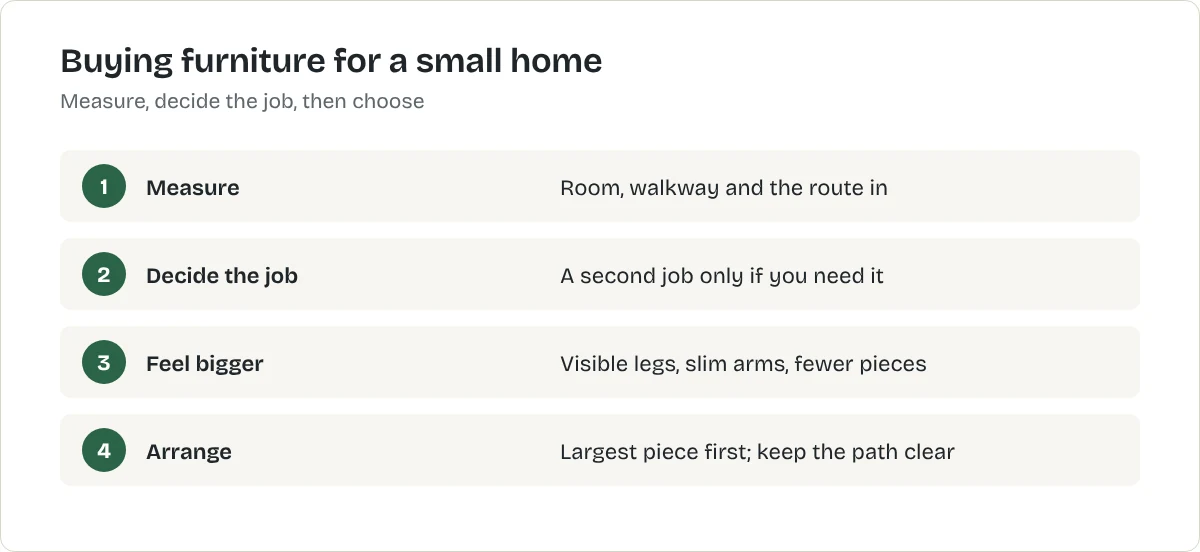
Measure the wall, then mark the piece on the floor with painter's tape and live with it for a day. Leave about 30 inches (75 cm) for main walkways. Then measure every door, hallway, stair and lift on the way in.
Choose pieces that earn their space
Ask what each piece must do. If it can do a second job you need, such as storage or a guest bed, that is a bonus; if the second job compromises the first, skip it.
- Sofas: best small apartment sofas and best sleeper sofas
- Beds: best storage beds
- Tables: best compact dining tables
- Desks: best folding desks and best compact home office desks
What makes a room feel bigger
- Visible legs. Seeing floor under furniture makes a room feel larger.
- Slim arms and frames. More seat for the width.
- Fewer, larger pieces rather than many small ones.
- Light colours for large pieces; colour in cushions and rugs instead.
- Furniture off the window. Daylight matters more than one more chair.
Arrange it
Place the largest piece first, keep the path clear, and float furniture off the walls where you can. In a studio, use furniture to divide the room into zones: studio apartment layout ideas.
Putting it together
Measure, decide each piece's job, buy the smallest piece that does it well, and check the route in before you order. Felt sliders under heavy pieces protect the floor when you rearrange.
Best for moving heavy furniture on hard floors
Felt furniture sliders
Pads that sit under furniture feet so a sofa or bed slides without scratching. This is a type of product, not one model. The button opens the retailer's results for it, so compare a few before you choose.
What we like
- Protects wood, laminate and tile floors, and your deposit
- Lets one person nudge a sofa into place
- Cheap and reusable
What to know
- Felt is for hard floors; carpet needs smooth plastic sliders
- Felt picks up grit, which can scratch: wipe pads before use
- Furniture still has to be lifted onto them
United States
United Kingdom
Not listed with our CA retailers yet.
Not listed with our AU retailers yet.
Research-based recommendation: we have not tested this product ourselves. How we evaluate products. Details checked October 2026.
Keep reading
New or second-hand?
Second-hand furniture is often better built than new flat-pack at the same price, and solid wood can be refinished. Check drawers run smoothly, joints are tight, there is no sign of woodworm or damp, and upholstered pieces have no stains or smells. Measure it before collecting, including the route into your home. New furniture is easier to return; read the terms, because large items often carry a collection fee.
Flat-pack tips
Assemble large pieces in the room where they will live, because finished wardrobes often will not fit through doors. Follow the instructions in order, keep fixings in a bowl, and do not fully tighten bolts until the frame is square. Fit any anti-tip strap supplied; ask your landlord about the fixing it needs.
Furniture that earns its space
In a small home, pieces that do two jobs are worth more: a storage bed, an ottoman that holds blankets, a bench that is also a shoe store, a drop-leaf table, a sofa bed. Raised legs make furniture look lighter and let you see floor beneath, which makes rooms feel larger. Light colours and glass or open designs also help.
Measure everything
Measure the room, the doorways, the stairs and lift on the way in, and allow space to walk around each piece: about 90 cm (36 in) for main walkways. Mark the footprint with tape on the floor before buying.
Order to buy in
Bed and sofa first, since they set the room. Then storage, then a table, then lighting and rugs. Smaller pieces are easier to choose once the large ones are in place.
Frequently asked questions
How do I choose furniture for a small room?
Measure the room and the route in, decide what each piece must do, and choose the smallest piece that does it well. Visible legs and slim arms make rooms feel larger.
Is multifunctional furniture worth it?
When both jobs are ones you need: a sofa bed for regular guests, a storage bed, a drop-leaf table. Avoid pieces that do two jobs badly.
How much space should I leave around furniture?
About 30 inches (75 cm) for main walkways is a comfortable guide; less works for paths you rarely use.
Related articles
Small-Space Furniture
Best Small Apartment Sofas
An apartment-size sofa, a loveseat or a modular sofa that arrives in boxes: how the three compare for small living rooms and narrow doors.
Small-Space Furniture
Best Compact Dining Tables
Drop-leaf, extendable or wall-mounted: how compact dining tables compare for small apartments, with the space each diner needs and the checks to make first.
Small-Space Furniture
Best Storage Beds
An ottoman bed lifts to reveal storage the size of the mattress; a drawer bed gives daily access; bed risers add space to the bed you have. How they compare.